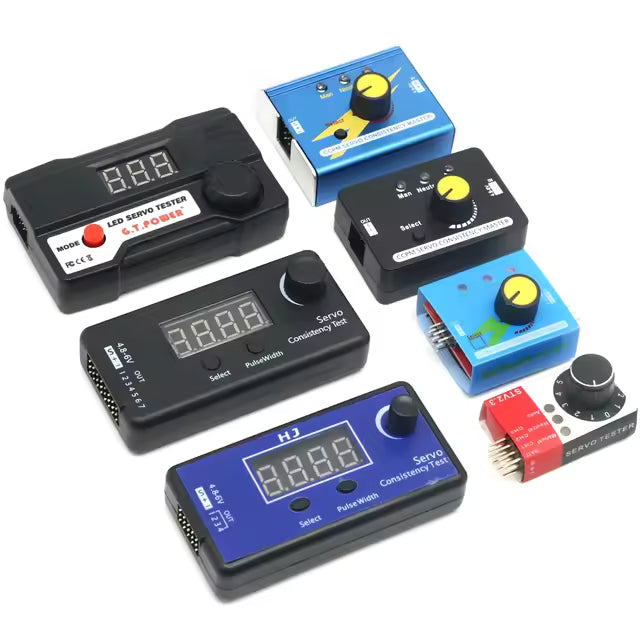
A standard analog servo tester can be used to test a digital servo because most servo testers provide a pulse width modulation (PWM) signal that is compatible with both types of servos. However, for full functionality, especially when testing digital servos for specific frame rates or features, a tester that allows for adjustable PWM signal settings is beneficial
How it works
PWM Signal:
Both analog and digital servos operate using a Pulse Width Modulation (PWM) signal to control their position. A servo tester generates this type of signal.
Universal Compatibility:
Most hobby servo testers are designed to be compatible with any three-wire servo, regardless of whether it's analog or digital, because they generate the standard PWM signal that the servo receives.
Considerations:
Advanced Features:
While a basic analog tester can function with a digital servo, digital servos may have advanced features like faster response times or specific frame rate requirements. If your digital servo has these features, a more advanced tester that allows you to adjust the PWM signal's frame rate or width will provide a more complete test.
Power Supply:
Regardless of the tester, you will need to provide a separate power supply to the servo, as the servo tester typically only provides the signal.
In summary, a basic analog servo tester will work for basic testing of a digital servo, but for the best results, especially with higher-end digital servos, you might want a tester with adjustable pulse width or frame rate settings.